
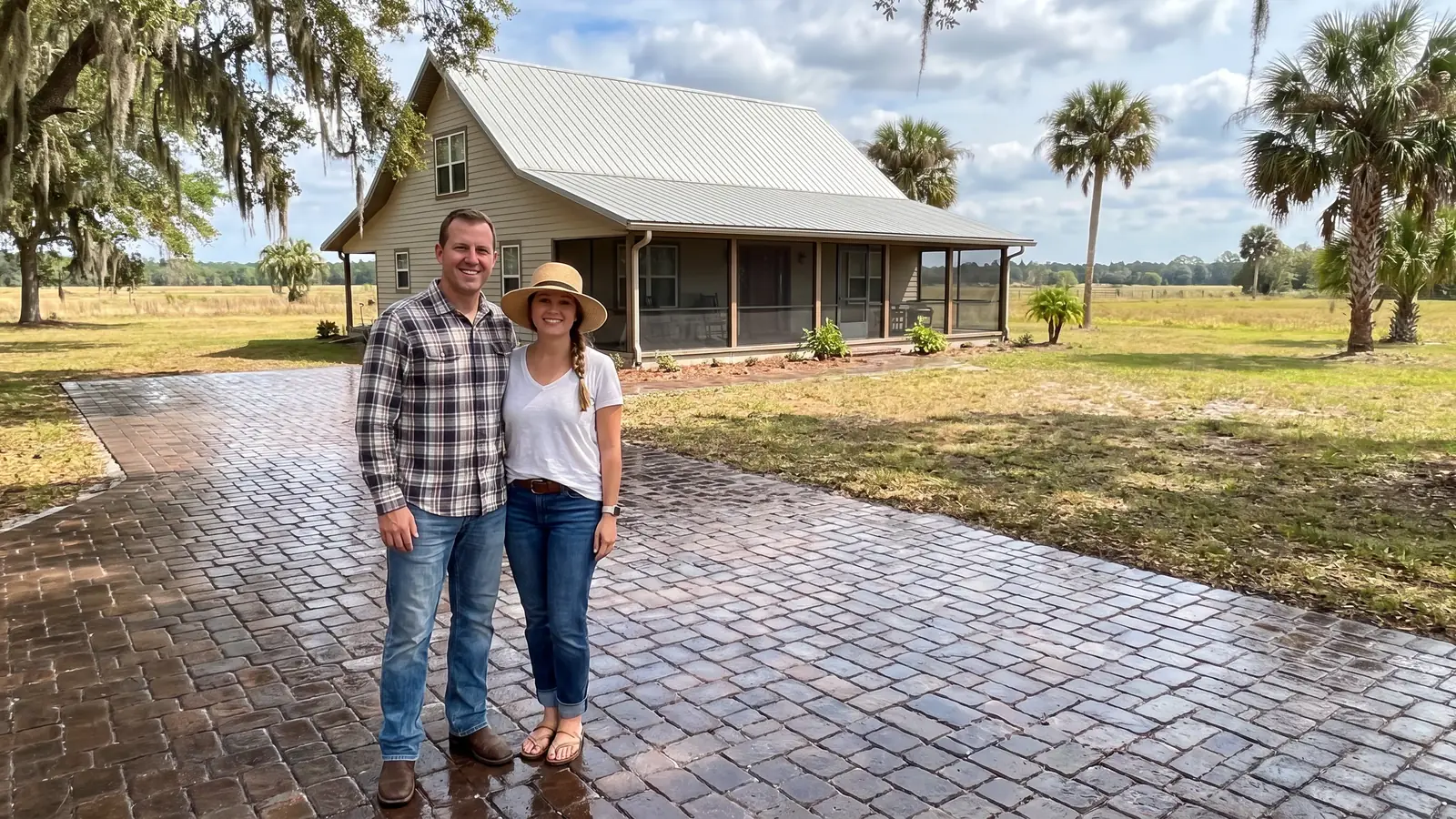
Paver sealing for Jacksonville Beach homes
Paver Sealing in Jacksonville Beach, FL
From Ocean Terrace to the Seawalk Pavilion, Jacksonville Beach pavers get a free sealing estimate when you call (904) 875-5989.
- Brings out deeper paver color
- Fresh joint sand helps lock pavers in place
- Gives weeds less room to grow
- Makes the surface easier to keep clean
- Free estimate, no obligation
Request a Free Estimate
Free, no obligation.
Fast, careful paver sealing in Jacksonville Beach
Paver sealing is available across Jacksonville Beach, from the walkable blocks near the ocean to the 1980s streets of Ocean Terrace. A local contractor does the washing, the new sand and the sealing for beach driveways, decks and patios, and estimates are free. A request through get your free estimate gets an answer within 1 business day, usually much sooner.
Think of the pale pavers beside your pool: dull with salt, a few stains, sand thin at the joints. After a wash, new sand and a coat, the color comes back and stays even. If you would rather talk, call (904) 875-5989 and describe the driveway, the deck or the courtyard.
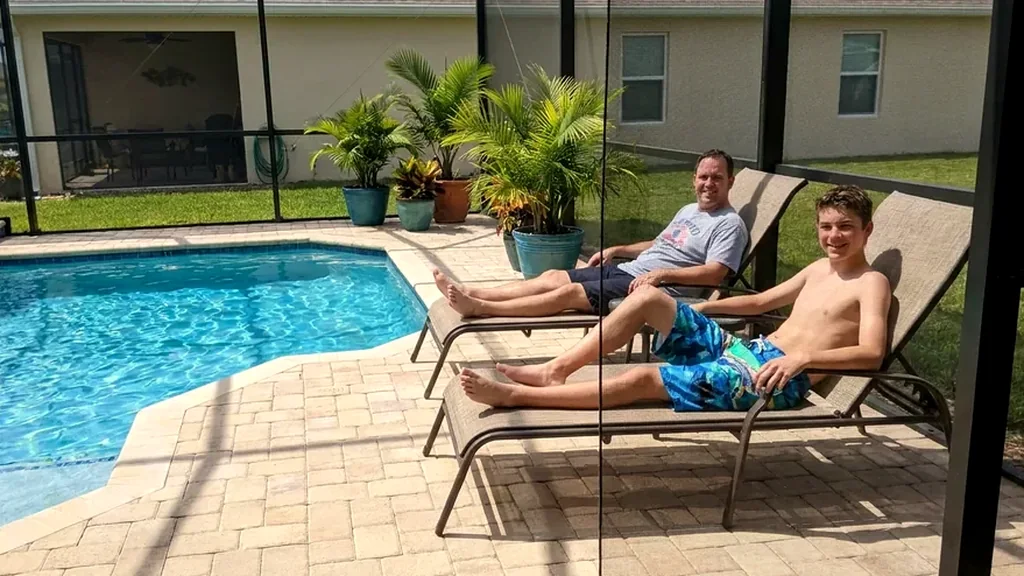
Why hire a local paver sealing contractor in Jacksonville Beach?
Jacksonville Beach homeowners hire locally because salt air, low ground and daily humidity change how a coat holds up. To hear how that fits your block, call (904) 875-5989.
A free look in person
The contractor checks your Jacksonville Beach pavers at no charge and names a price before any work is agreed.
A yardstick for your quote
Beach-area bids can be checked against a published $1.75 to $3.25 per square foot to clean, sand and seal.
Finish choices
Matte keeps pale pavers calm. A wet look deepens color but shows scuffs sooner. You choose before sealing day.
No pressure
You pick the date and the finish. A Jacksonville Beach estimate has no obligation, and nobody pushes you to book on the spot.
Get Your Free Estimate in Jacksonville Beach
Tell us about your pavers in Jacksonville Beach.
Free, no obligation
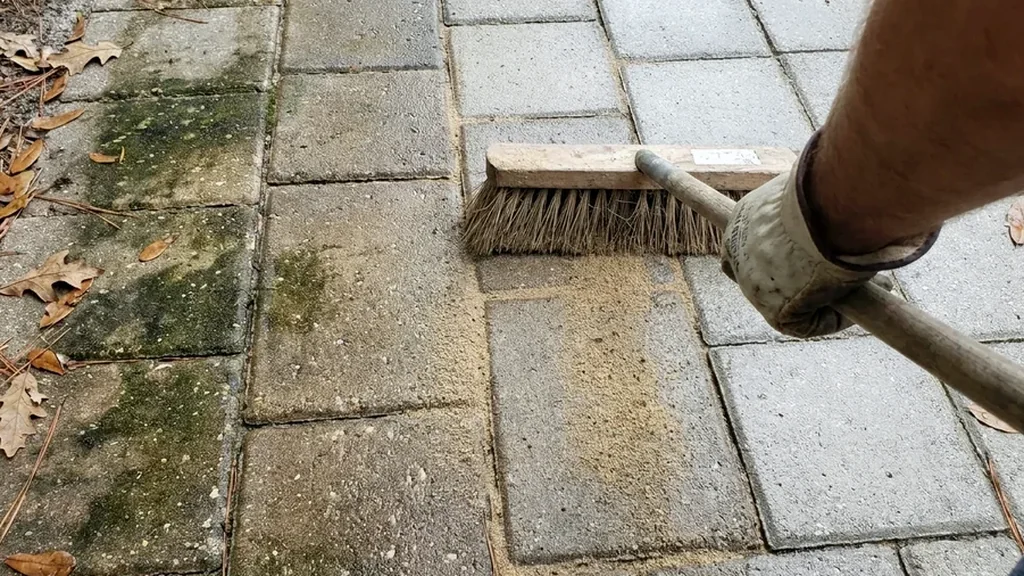
What paver problems show up most in Jacksonville Beach?
Salt that dries into a film
UF/IFAS says salt-spray damage is common within a couple of miles of salt water, and about two-thirds of Jacksonville Beach is water. A paver maker explains that salt drifts in as fine particles and can crystallize once moisture dries. On pale pavers that shows up as a dull, chalky look. A paver maker adds that dense pavers with low water absorption resist salt and moisture better, though even a good one needs rinsing. Routine rinsing keeps buildup down, and a sealed surface rinses more easily. That is the case for sealing at the beach: the coat does not stop salt from landing, but it gives you a surface that gives it up.
White bloom that is not salt
Cement-based pavers can show efflorescence, a white residue left when moisture moves through them, according to a paver maker. Sealing damp pavers can also turn a coat white, a Jacksonville company reports. Beach air stays humid, so telling the two apart matters, because the fix for one is a rinse and for the other is a new coat. A contractor who waits for a dry surface avoids the second kind. When you describe white on a deck, say when it was last sealed and how damp the surface was that day. If you see white on a fresh coat, ask which one you have before anyone re-sands or re-coats it.
Low ground that holds water
The city sits at an elevation of 0 feet on the northern half of San Pablo Island, with the ocean on one side and water on the other. A paver maker says coastal installs need careful grading so water moves away from the house. A driveway that has sagged can hold a puddle after rain, and a courtyard that slopes toward a wall instead of away from it is worth pointing out at the estimate. Sunken spots get reset before sealing, since sealer keeps the dip. Mention any place where water stands after rain, because that spot tells the contractor where to look first.
Chlorine and salt on pool decks
One Jacksonville firm says chlorine or salt residue from pool areas shortens the time between coats. Pool decks also need an anti-slip additive in the sealer, whatever the finish. Bare feet and wet footing are the reason, and a smooth sealed surface can turn slick when it is wet. Say at the estimate whether your pool uses chlorine or a salt system, and whether the deck gets splashed often. Ask too whether the deck is concrete pavers or travertine, since dense stone can sometimes stay bare. The coat on a deck beside a pool may need renewing sooner than the one on the front walk.
Joint sand lost to rain
NOAA normals show about 52 inches of rain a year over roughly 122 days, with August the wettest month at 7.54 inches, which makes late summer the hardest time to find a dry window. Downpours push sand out of the joints, and a short, hard storm does more of that than a slow drizzle. Washing removes more, so fresh sand goes in before sealing. A paver maker advises sand that suits a coastal climate and a check of the joints from time to time. Full joints help lock the pavers in place. Look at the sand along your driveway edge after a wet week, and you will see how fast it moves.
Does a driveway in 1980s Ocean Terrace seal the same way as one on an older beach block?
The steps match, but the sizes and ages differ. Ocean Terrace dates to the early 1980s, with mostly single-family homes of three to six bedrooms, so driveways and pool decks can run large. A bigger area means a bigger total, even at the same rate. Tell the contractor your street when you get your free estimate.
San Pablo Terrace is older, with homes built between 1955 and 2005 and a median build year of 1963. South Pablo Beach has a walkable street grid close to the ocean, so a job there may be a front walk or a small courtyard. Name your part of town when you call (904) 875-5989. Homes of about three bedrooms and two baths, common there, often have a modest driveway and a front walk.
Historic buildings also set the look of the beach. The Mission-style Casa Marina Hotel, finished in 1925, and the Art Moderne lifesaving station are both on the National Register. If your home has that older feel, a matte finish keeps pavers from outshining it. get your free estimate and ask about finishes.
What does paver sealing cost in Jacksonville Beach?
Published rates in the Northeast Florida region start at $1.75 and top out at $3.25 per square foot for a full clean, sand and seal. Salt film, old sealer and a pool deck all push a Jacksonville Beach job around inside it. Total cost follows total area, so a large Ocean Terrace layout costs more than a small courtyard. For your number, get your free estimate, free of charge.
Old coats can add work, because failed sealer has to come off before a new one goes on. Pavers that have sunk or lifted get reset first. The contractor can tell you in person which of these apply. Call (904) 875-5989 to describe what you have.
| Paved area | Typical example | Clean, sand and seal |
|---|---|---|
| 300 sq ft | Small patio or walkway | $525 to $975 |
| 600 sq ft | Two car driveway | $1,050 to $1,950 |
| 1,000 sq ft | Large driveway or pool deck | $1,750 to $3,250 |
| 1,500 sq ft | Driveway plus pool deck | $2,625 to $4,875 |
Math based on the $1.75 to $3.25 per square foot that Northeast Florida paver companies publish. Your contractor sets the actual price after seeing the surface. Repairs, leveling and stripping failed sealer are usually extra.
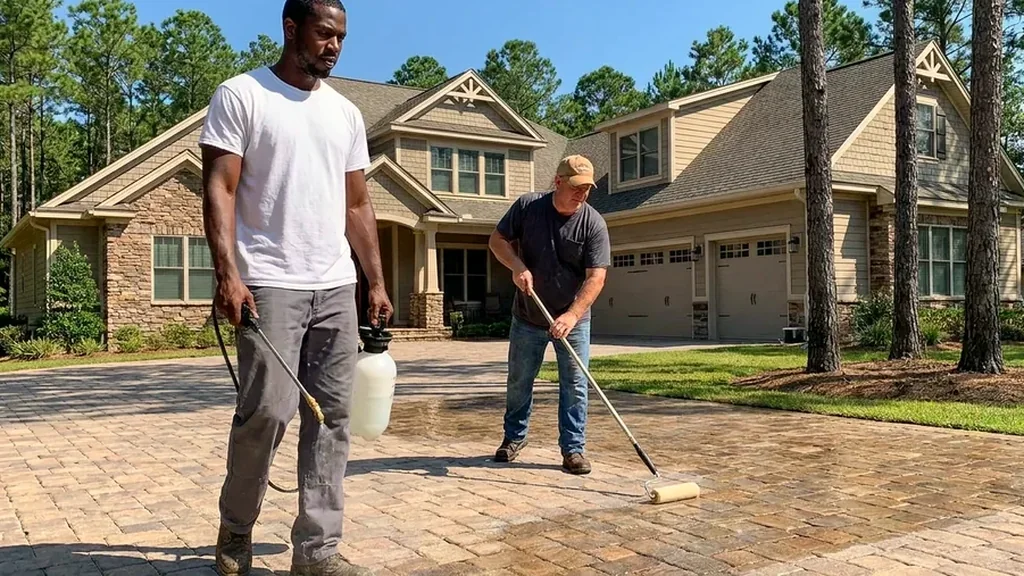
How does a paver sealing job work in Jacksonville Beach?
Walk the surface and read the old coat
At the first visit, the contractor looks over your Jacksonville Beach pavers for dips, lifted edges and any whitening. A sunken area gets reset first, because sealer locks in the problem. The old coat is identified, since water-based sealer cannot go over solvent-based. Pool decks are checked for slick spots, and any that seem polished are noted for the anti-slip step. Show the contractor any spot that bothers you, and it goes on the list.
Wash off the salt
Cleaning takes off the salt film and green growth and clears weeds from the joints. Stains from oil or rust are pre-treated, with the caveat that deep ones may fade rather than vanish. Rinse water is kept off plants and wood trim near the pavers. Salt is a daily visitor at the beach, so a full rinse matters, and the last rinse should run clean before the next step begins. Any grass or weeds that have crept into the joints come out in this stage too.
Fresh sand fills the gaps
Washing clears the old sand, so the joints are refilled with sand suited to a coastal climate and then compacted. The surface is blown clean, and the contractor looks along the joints for any low line that needs a top-up. Colored joint sand is an upgrade, so ask if you want a matched tone. The coat waits until the sand is in. Full joints keep rain from carrying dirt in. Any loose sand is brushed away before the coat so it cannot cling to the sealer.
Wait out the damp
Sealer has to meet a dry surface. Humidity near the ocean slows drying, and a coat over damp stone can turn white. A careful contractor reads the sky and tests the surface before starting. A showery afternoon can move the day. A reschedule is better than a coat that clouds. Moving a date costs far less than redoing a clouded coat.
Spray, back-roll and keep off
The sealer goes on by sprayer, and a roller follows to push it into the joints. A pool deck gets an anti-slip additive. Walking is usually fine in a few hours, while cars stay off about a day. A bead test later shows whether the coat is still working. On a brand-new installation, a Jacksonville company says to wait 30 to 60 days before the first seal. Water that beads is a good sign. Water that sinks in and darkens the stone is the cue to renew.
Complete paver services in Jacksonville Beach
A Jacksonville Beach job follows a set order: wash, re-sand, dry, then seal. The wash lifts salt film and green growth from the surface and the joints. Fresh sand fills the joints, and the sealer goes down last so nothing is trapped under it. To learn how long each stage runs on your lot, call (904) 875-5989.
Driveways take tires and the first splash of every storm, so the wheel lanes show wear first. Pool decks see chlorine or salt and bare feet, which is why the sealer there carries grip. Front walks and courtyards are smaller jobs and worth a look as well. List each surface when you get your free estimate.
Water-based sealer cannot go over a solvent-based coat, so whatever is down now sets the rule. After that comes the look: matte keeps pale pavers calm, and a wet look deepens color but shows scuffs sooner. Semi-gloss is the most common local choice, one company says. Call (904) 875-5989 to talk finishes before the date is set.
Weather sets the date. Rain here averages about 52 inches a year over roughly 122 days, and August is the wettest month. Sealer needs a dry surface, and humid beach air slows drying, so a clear stretch matters. To pick a date that fits the forecast, get your free estimate.
Questions to ask before you hire
- How do you get dirt and old tire marks out of my driveway pavers?
- Can the pool deck and the driveway both be done in one visit?
- Is the sealer you plan to use made for a patio that sits in full sun all day?
- Do you charge extra to drive out to a home on a long dirt or county road?
- My water comes from a well, so can the rust marks from my sprinklers come off before the sealer goes on?
- What does the job cost if only part of my pavers need work, like the front walk?
- How do you keep sealer off my lawn edge and the plants along the walkway?
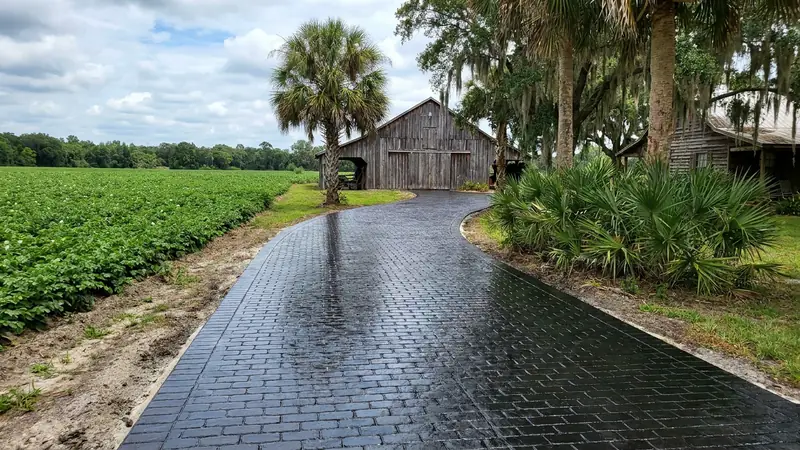
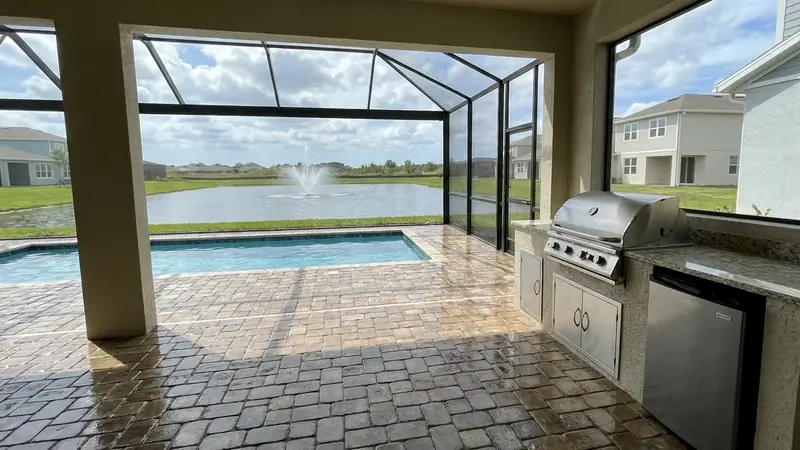
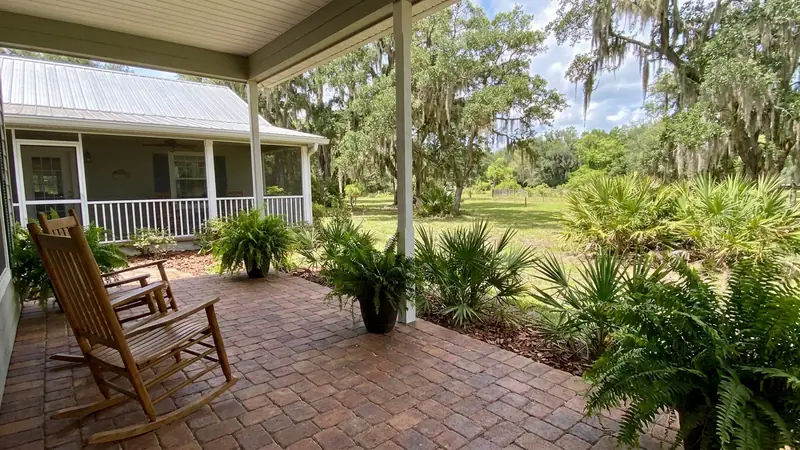
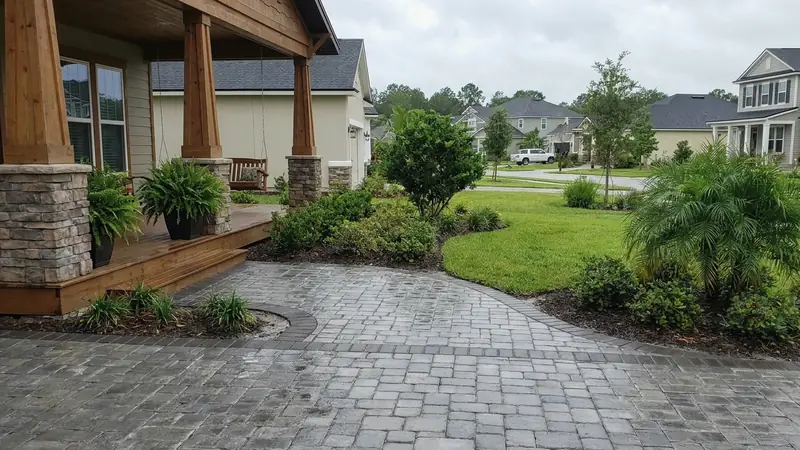
What do sealed pavers look like around Jacksonville Beach?
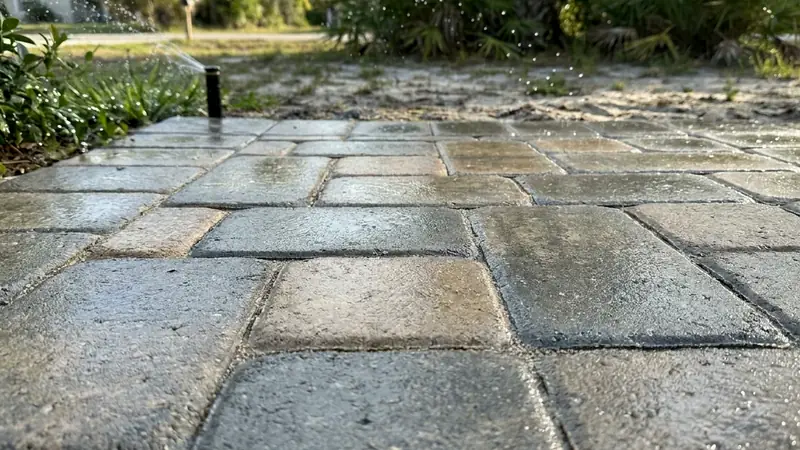
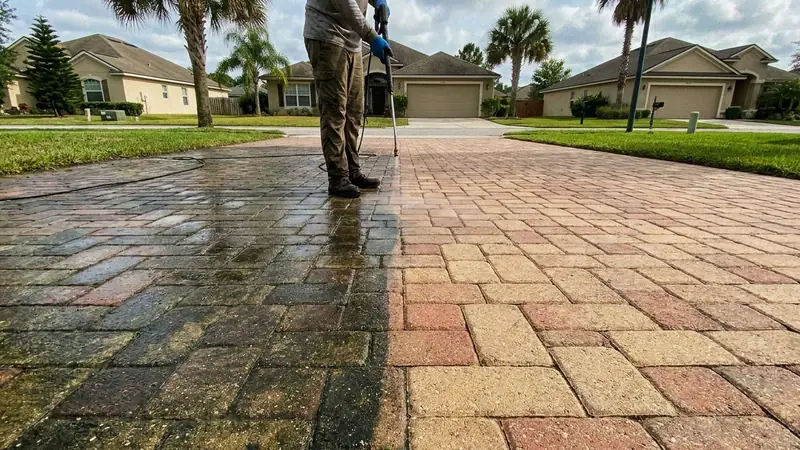
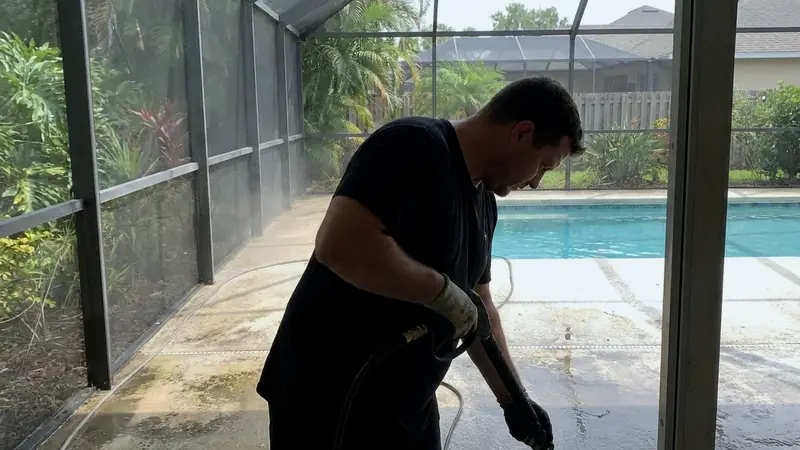
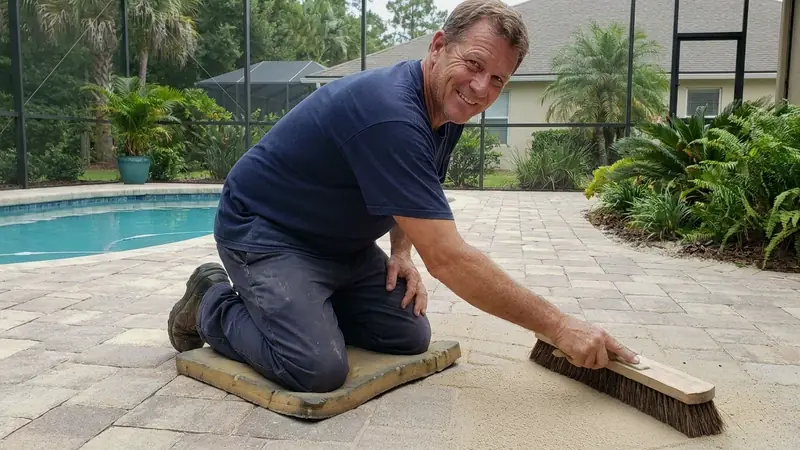
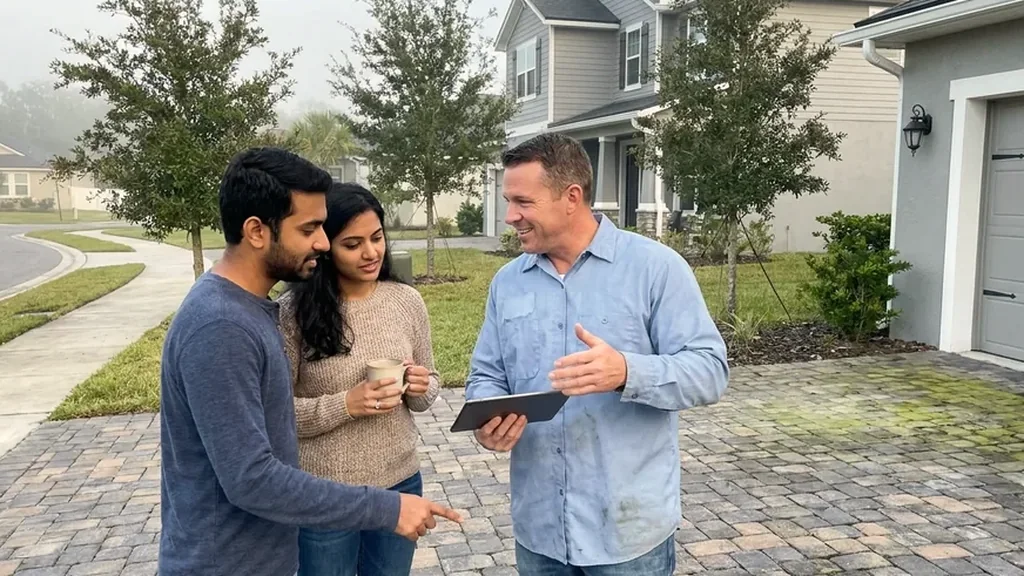
Why local matters in Jacksonville Beach
A contractor who works Jacksonville Beach knows how salt behaves here. Fine particles land on the surface and dry, and a rinse routine keeps buildup down. That shapes both the wash and the sealer. Call (904) 875-5989 to talk with someone who already works the beach side of the county.
Local knowledge also covers the calendar. Rain falls on about 122 days a year, so dry windows are worth planning around. A driveway at sea level can stay wet longer after a storm. You can get your free estimate and ask how the contractor plans for that.
The housing mix matters as well. Ocean Terrace homes from the 1980s, San Pablo Terrace homes from the 1960s and older beach blocks each ask for something different. A contractor who knows them asks the right questions. Mention your street when you get your free estimate for a free look.
Is Jacksonville Beach an old town or a new one?
It is both. The Scull family built the first house in 1884, the town was renamed Pablo Beach in 1886, and it took the Jacksonville Beach name on June 15, 1925. The Casa Marina Hotel from 1925 and the Beaches Museum, with its railway depot from about 1900, keep that past in view. If you live near the older blocks, get your free estimate.
Shad's Pier opened in 1922, and Jimmy Doolittle flew from Pablo Beach to San Diego that September. The Seawalk Pavilion at Latham Plaza is an outdoor amphitheater, and the Art Moderne station of the 1912 lifesaving corps is part of that history. If you live near the pier, the Seawalk or the old station, call (904) 875-5989 and give your street.
Frequently Asked Questions
How much is paver sealer per square foot in Jacksonville Beach?
Companies in the region publish a range of $1.75 to $3.25 per square foot to clean, sand and seal. Salt film, old sealer and pool decks move a Jacksonville Beach job within it. Check that your quote lists the total square footage. A pool deck and a driveway are priced by the same square foot rate, so add up both areas before you judge a total.
Is it good to seal pavers near the ocean in Florida?
Yes, for concrete pavers. A Jacksonville company says a coat cuts UV fading, joint washout and mildew, and salt in the air adds one more reason to keep it renewed. A dense stone such as travertine can go without sealer, according to that company. If you are unsure what your pavers are made of, ask at the estimate.
How long do paver sealers last in Jacksonville Beach?
Expect somewhere between two and five years from one coat to the next. Salt spray near the coast and chlorine or salt from a pool can shorten that. Water that sinks in within seconds rather than beading is the sign that a coat has worn out. Heavily driven lanes and sunny pool decks tend to show it first, so test those spots.
Does a pressure washing business also seal pavers in Jacksonville Beach?
Often, yes. Many exterior cleaning firms also seal, and one job can cover the wash, fresh sand and the coat. Washing pulls out joint sand, which is why sand has to go back in before sealing. A free estimate lays out each stage, so check that the quote names all three.
Does salt air change how pavers are sealed near the ocean?
Mostly it changes the preparation, not the product. Salt can dry on the surface as a film, so the wash and a full rinse matter. A paver maker says routine rinsing helps manage coastal buildup, and a sealed surface makes that rinsing easier. A hose rinse of the pavers after a salty, windy week is a simple habit that helps.
Why did my sealer turn white after the job?
One Jacksonville company traces most whitening to sealer laid over damp pavers. Humid beach air makes a damp surface easy to miss, especially in the morning, when dew can linger on shaded edges. Ask the contractor how the surface is checked for dryness before the coat goes on. A dry surface before the first pass protects the coat, so it is worth the wait.
Does living at sea level change how a Jacksonville Beach driveway is sealed?
It changes how long the job waits. The city sits at an elevation of 0 feet, and a paver maker says coastal installs need careful grading so water moves away from the house. A driveway that holds water after rain has to dry fully before sealer goes on. Sunken spots are reset first so the coat does not lock in the dip.
How soon can I drive on a sealed Jacksonville Beach driveway?
Feet can usually return within a few hours. Cars need about a day, and the sealer type and the weather can stretch that. The contractor will confirm the timing for the sealer used. Clear the drive of cars before the job starts so the work can begin on time.
Nearby areas we serve
Ready for a Free Estimate in Jacksonville Beach?
Call (904) 875-5989 and tell us about your pavers.
Free, no obligation